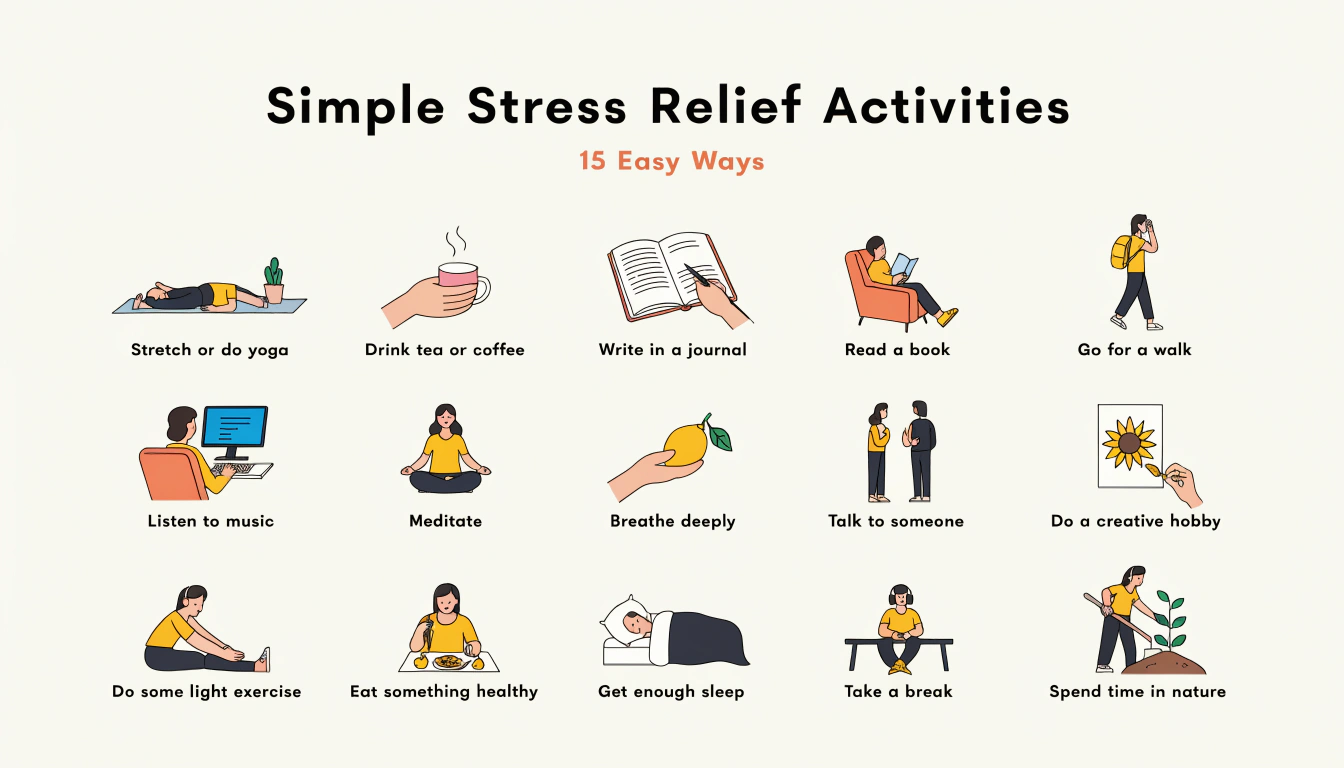
Stress is a normal part of life, but handling it in healthy ways is crucial for both physical and mental well being.
Easy stress relief activities can help you relax, make your mood happy and restore your energy without needing expensive tools or complicated routines.
In this article we will discuss whether you’re dealing with work pressure, school responsibilities or everyday https://thehealthypath.online/best-foods-to-boost-your-immune-system-naturally-guide-2026/ challenges, including various habits to your routine can make a big difference.
What are the activities utilizing for simple stress relief activities?
Stress impacts everyone’s life at some point, but searching for healthy ways to control it can increase your overall quality.
These activities like deep breathing,exercise,yoga,spending time in nature are easy to practice for every individual,there is no need for any money and it can fit in anyone’s schedule.
The above helps calm the mind, reduce tension and support overall well being.
Why Managing Stress Is Important?
Stress is the body’s natural response to hurdles or difficult situations. While short term stress can motivate you to complete tasks, ongoing stress may affect your physical health, emotional well-being, relationships and productivity.
High stress levels can cause headaches, poor sleep, fatigue, anxiety, difficulty in focusing and even long term health problems if left without treatment.
Managing stress enhances mood, boosts energy and strengthens the immune system.Healthy stress management also encourages a more balanced and positive lifestyle.
1. Practice Deep Breathing
Firstly, deep breathing is one of the easiest and most effective ways to reduce stress.Breathing signals your nervous system to relax, lowering your heart rate and reducing muscle tension.
It is simply to be practiced anywhere, whether you are at home, in the office, or traveling.
It involves inhaling slowly through your nose for four seconds, holding your breath for four seconds and exhaling gently through your mouth for six seconds. This task can make your mind more relaxed and keep you away from any kind of hard stress.
2. Go for a Walk
Everyday walking can improve your physical fitness as well as mentally.Outdoor walks give you fresh air for breathing which is a requirement for healthy life.It increases blood circulation, releases endorphins and provides a healthy disturbance from stressful thoughts.
Even a 20-minute walk each day can improve mood, reduce anxiety and increase energy levels. Regular walking also supports heart health, better sleep and overall physical fitness while helping manage everyday stress.
3. Spend Time in Nature
Another simplest way is to spend time in God’s beautiful valley.Everywhere a lovely bird’s voices,greenery make your mind fresh and calm.
You enjoy your life from far away from busy routines and forget about challenges you experienced in daily lives,you enjoy a peaceful surroundings.
Research suggests that spending time in green spaces lowers stress hormones and improves emotional well being.
4. Listen to Relaxing Music
Some people love music because it has a powerful influence on emotions. Soft instrumental music, nature sounds, classical melodies or your favorite calming songs can help reduce stress and promote relaxation.
Music slows the heart rate, lowers blood pressure, and creates a peaceful mental environment.
5. Exercise Regularly
Physical activity is one of the most capable natural stress relievers. Exercise stimulates the release of endorphins, often called the body’s feel good hormones. These chemicals improve mood, reduce anxiety, and increase overall happiness.
Activities such as jogging, cycling, swimming, dancing, yoga, or home workouts can all help relieve stress.
6. Try Yoga
Yoga is the mixture of best movements, controlled breathing and mindfulness that reduce stress and improve health and flexibility. Daily yoga practice helps relax tense muscles, improve posture and create a greater sense of inner peace.
7. Write in a Journal
Journaling provides a healthy outlet for expressing thoughts and emotions. Writing about your worries, daily experiences, or personal goals helps organize your thoughts and reduces emotional pressure.
Many people find that writing allows them to better understand their feelings and identify practical solutions to problems.
8. Spend Time with Family and Friends
Powerful social connections play a significant role in managing stress. Talking with trusted family members or friends provides emotional support and helps you feel less isolated during difficult times. Sometimes simply sharing your concerns with someone who listens can reduce stress significantly.
Spending quality time together through conversations, meals, games or outdoor activities strengthens relationships and creates positive memories. Healthy social support contributes to greater emotional resilience and overall happiness.
9. Get Enough Sleep
Sleep and stress are closely connected. Lack of sleep can increase stress levels, while stress can make it difficult to sleep. Establishing healthy sleep habits helps your body recover both physically and mentally.
You should manage your sleep seven to nine hours of quality each night. Creating a relaxing bedtime routine, avoiding screens before sleep, and maintaining a consistent sleep schedule improve sleep quality and reduce daily stress.
10. Reduce Screen Time
Constant exposure to smartphones, computers, and social media can increase stress and mental fatigue. Taking regular breaks from digital devices allows your mind to rest and improves focus.
Consider setting aside specific times each day to disconnect from technology. Using that time for reading, exercising, spending time outdoors, or talking with loved ones promotes healthier stress management.
11. Enjoy a Hobby
Hobbies give a positive escape from daily pressures and encourage creativity. Activities for example painting, gardening, cooking, photography, knitting, or playing a musical instrument allow your mind to focus on something enjoyable instead of stressful situations.
Regular participation in hobbies also builds confidence and provides a sense of accomplishment.
12. Stay Hydrated and Eat Healthy
Nutrition plays an important role in managing stress. Eating balanced meals with fruits, vegetables, whole grains, lean proteins, and healthy fats provides the nutrients your body needs to function well. https://thehealthypath.online/dehydration-symptoms-and-hydration-tips-guide/ Skipping meals or consuming excessive sugar and caffeine can increase feelings of stress and fatigue.
Drinking enough water throughout the day also supports brain function and energy levels. Proper hydration helps maintain concentration and reduces physical symptoms associated with stress.
13. Practice Time Management
Poor time management often increases stress because unfinished tasks create unnecessary pressure. Creating a daily schedule, setting priorities, and breaking large projects into smaller steps makes responsibilities more manageable.
Learning to say no when necessary and avoiding procrastination also reduces stress. Organized planning helps you feel more in control of your time and responsibilities.
14. Practice Gratitude
Focusing on positive aspects of life helps reduce negative thinking patterns. Taking a few minutes each day to reflect on things you appreciate encourages a more optimistic outlook and improves emotional well-being.
Gratitude can be practiced by writing in a journal, expressing appreciation to others, or simply thinking about positive experiences before going to sleep. Small moments of gratitude create lasting emotional benefits.
15. Help Others
Acts of kindness not only benefit others but also improve your own mental health. Volunteering, helping a neighbor, supporting a friend, or participating in community activities creates a sense of purpose and strengthens social connections.
Helping others shifts attention away from personal worries and promotes feelings of satisfaction and happiness. Even small acts of kindness can have a meaningful impact on stress levels.
Learn to Accept What You Cannot Control
Many sources of stress come from trying to control situations that are beyond your influence. Accepting uncertainty and focusing on what you can change helps reduce unnecessary anxiety.
Developing a flexible mindset allows you to adapt more easily to life’s challenges. Practicing patience, resilience, and positive thinking helps you respond calmly to unexpected events.
Build a Daily Stress Relief Routine
Managing stress becomes easier when healthy habits become part of your everyday routine. You do not need to practice every stress relief activity each day. Instead, choose a few techniques that work best for your lifestyle and use them consistently.
For example, you might begin your morning with deep breathing, take a short walk during lunch, listen to calming music in the evening, and end your day by writing in a gratitude journal. Small daily habits often produce greater long-term benefits than occasional efforts.
When to Seek Professional Help?
While simple stress relief activities are effective for managing everyday stress, some situations require additional support. If stress becomes overwhelming, lasts for several weeks, interferes with daily life, or leads to anxiety or depression, speaking with a healthcare professional or licensed therapist is important.
Professional support provides personalized coping strategies, emotional guidance, and treatment options when needed. Seeking help is a positive step toward improving mental health and overall well-being.
FAQS
1. How to calm anxiety?
Take slow, deep breaths, focus on the present moment, and remind yourself that the feeling will gradually pass.
2. How to relax your nervous system?
Practice deep breathing, stay physically active, and get enough rest to help calm your nervous system naturally.
3. What is the difference between stress and anxiety?
Stress is usually a response to a specific challenge, while anxiety is persistent worry or fear that may continue even without an immediate cause.
Conclusion
Simple stress relief activities can make a significant difference in your physical, emotional, and mental health.
Practices such as deep breathing, walking, exercise, meditation, spending time in nature, maintaining healthy relationships, and getting enough sleep help reduce daily stress naturally. The key is consistency rather than perfection.
By making these healthy habits part of your routine, you can build resilience, improve your mood, and enjoy a calmer, healthier, and more balanced life.
Leave a Reply