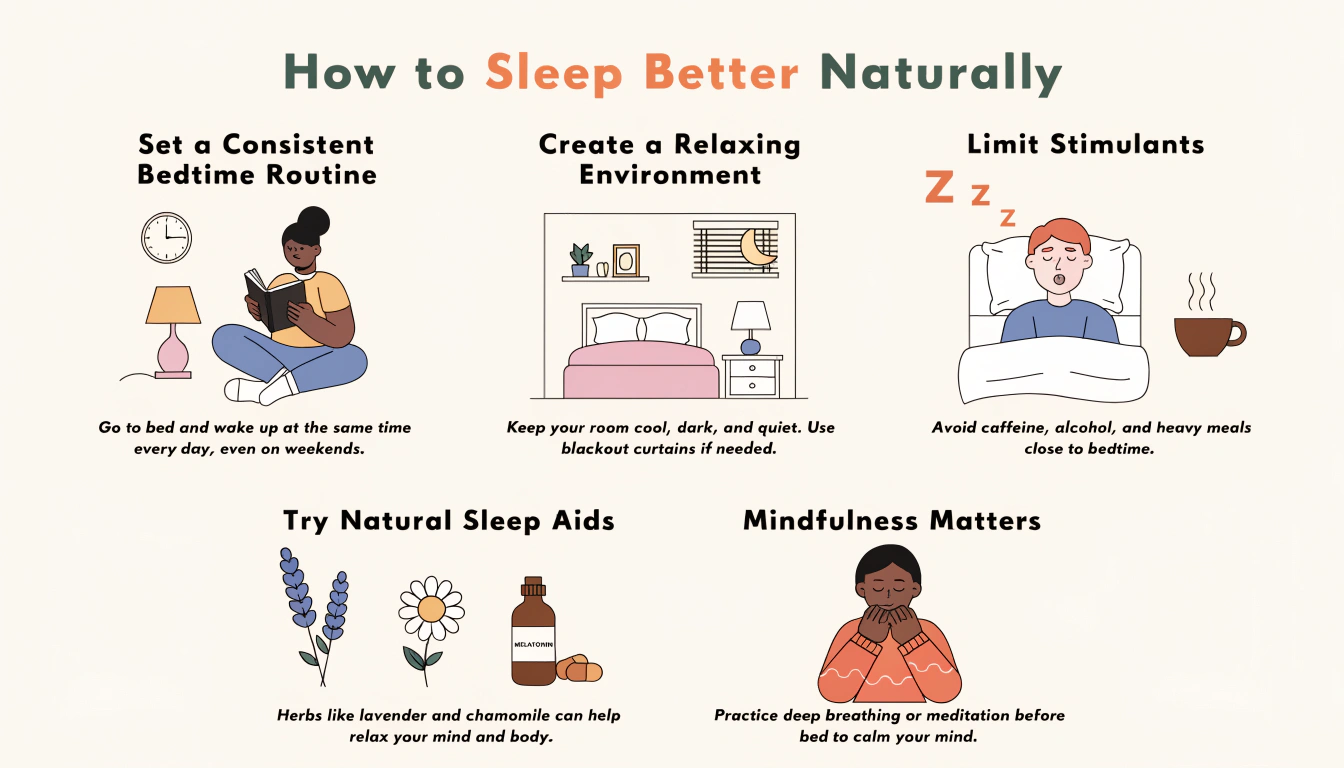
Getting a good sleep at night is one of the most essential parts of keeping healthy.
Quality sleep helps your body recover, lighten up your mood, sharp memory and give you energy for the whole day. But sadly,many people fight for sleeping due to stress, poor habits or unhealthy lifestyles.
Now it sounds good that you can sleep better naturally without depending on sleeping pills. In this guide we will explain practical, natural ways that can help you sleep better every night.
Why Natural Sleep Matters?
Sleep is your body’s natural healing process.http://thehealthypath.online/?p=21
During sleep, your brain remembers memories, your muscles recover and your immune system becomes stronger.
While on the other hand,poor sleep can lead to fatigue, difficulty concentrating, weight gain, anxiety and increased risk of diseases.
Understanding Your Sleep Cycle
Your body follows a circadian rhythm.This internal clock tells your body when it’s time to wake up and when it’s time to sleep.
The sleep cycle includes several stages:
- Light sleep
- Deep sleep
- REM (Rapid Eye Movement) sleep
Each stage plays a crucial role in physical recovery and mental health. Disturbance in these cycles rapidly can leave you feeling tired even you are spending a lot of hours in bed.
Maintain a Consistent Sleep Schedule
One of the easiest ways to enhance sleep naturally is manage same time of going to bed and waking up every day.
A regular sleep timing helps control your body’s internal clock. Even on weekends, try not to stay up too late or sleep far beyond your normal wake up time.
Regularity trains your brain to feel sleepy at the right time every night.
Create a Relaxing Bedtime Routine
Your body needs signals that it’s time to wind down.Relaxing bedtime routine involves;
- Reading a book
- Taking a warm bath
- Gentle stretching
- Meditation
- Deep breathing exercises
- Listening to calming music or comfortable sounds.
Avoid exciting activities before bed, like heavy workouts.
Reduce Screen Time Before Bed
Phones, tablets, computers, and televisions produce blue light that inhibits melatonin production.
Melatonin is the hormone responsible for making you feel sleepy.
Instead of using screens, spend this time reading or practicing relaxation techniques.
Make Your Bedroom Sleep-Friendly
Your bedroom environment has a major effect on sleep quality.
A comfortable sleep environment should involve:
- A good mattress
- Comfortable pillows
- Cool room temperature
- Darkness
- Quiet surroundings
Blackout curtains, eye masks or earplugs can also improve sleep if outside light or noise is a problem.
Watch What You Eat Before Bed?
Heavy or junk meals late at night can make problem to fall asleep.
Instead:
- Eat dinner at least two to three hours before going to bed.
- Avoid spicy and greasy foods.
- Avoid sugary snacks before bed.
Limit Caffeine and Alcohol
Avoid caffeine before going to bed,because it stays too long in the body.
Coffee, tea, energy drinks, and some soft drinks may interrupt sleep if consumed late in the day.
So, alcohol may make you sleepy initially, it often disrupts deep sleep later during the night, leading to poor sleep quality.
Exercise Regularly
Physical activity naturally improves sleep.
People who exercise regularly often:
- Fall asleep faster
- Sleep more deeply
- Wake up less during the night
At least 30 minutes of moderate exercise most days,and avoid extreme exercise within two hours of bedtime.
Manage Daily Stress
Stress is one of the biggest causes of sleeplessness.
Natural stress-management techniques include:
- Meditation
- Yoga
- Deep breathing
- Journaling
- Spending time outdoors
- Talking with friends or family
Avoid Long Daytime Naps
Short naps in the can make you refresh, but long naps may interfere with nighttime sleep.
If you need a nap:
- Keep it under 30 minutes.
- Avoid napping late in the afternoon.
Don’t Force Yourself to Sleep
If you cannot sleep after 20 minutes, get out of bed.
Do relaxing things like:
- Reading
- Listening to calming music
- Gentle stretching
Return to bed only when you begin feeling sleepy.
Natural Foods That May Improve Sleep
Various foods contain nutrients that support healthy sleep.
Examples:
- Bananas
- Kiwi
- Almonds
- Walnuts
- Oatmeal
- Turkey
- Cherries
- Milk
- Pumpkin seeds
These foods have magnesium, tryptophan, or melatonin, which may support better sleep naturally.
When to See a Doctor?
These natural methods I discussed above work well for many people, but continuously sleep issues may require medical review.
Benefits of Sleeping Better Naturally
Enhance sleep naturally offers many long lasting benefits.
These include:
- Better concentration
- Improved memory
- Stronger immune system
- Healthier heart
- Better mood
- Increased energy
- Weight management
- Reduced stress
- Better skin health
- Improved overall well-being
Conclusion
Knowing how to sleep better naturally doesn’t demand expensive products or medications.
Small lifestyle changes, like maintaining a proper bedtime, reducing screen time, exercising daily, decreasing stress and a peaceful sleep environment can improve your sleep quality.
While results may not happen overnight, staying consistent with healthy sleep habits allows your body to restore its natural rhythm. If these methods do not work then go to seek for professionals.
Frequently Asked Questions (FAQs)
1. How many hours of sleep do adults need?
Adults need between seven and nine hours of sleep each night.
2. What is the 5 3 3 rule for sleep?
The 5-3-3 rule for sleep means avoid caffeine for 5 hours, stop eating 3 hours before bed, and avoid screens for 3 hours before bedtime to help improve sleep quality.
3. What is the hardest age to sleep train?
Many experts consider 8–10 months old the hardest age to sleep train because separation anxiety and increased mobility often make bedtime more challenging.